Blazer vs Sport Coat Vs Suit: Which Should You Choose?
A practical head-to-head comparison of Blazer and Sport Coat Vs Suit, covering quick verdict, key differences, category winners, buyer fit, and FAQ.
Blazer vs Sport Coat Vs Suit: Which Should You Choose?
Head-to-head comparison
Overall winner: Blazer for its unparalleled versatility and enduring style.
The blazer offers a unique blend of smartness and adaptability, making it an essential piece for a considered wardrobe. While sport coats excel in casual, textured expression and suits provide peak formality, the blazer stands out as the most multi-purpose choice for those seeking fewer throwaway decisions. It transitions effortlessly across various occasions, from business casual to semi-formal events, allowing for diverse pairings with existing garments.
Head-to-Head Scorecard
For those curating a wardrobe of enduring pieces, understanding the distinctions between a blazer, a sport coat, and a suit jacket is fundamental. In 2026, as trends lean towards considered purchases and functional elegance, choosing the right outer layer is more about intentional style than fleeting fashion. This detailed comparison, based on extensive product research, official information, public feedback patterns, and editorial analysis, aims to guide you in making a choice that aligns with a life of more meaning and fewer throwaway decisions.
While often used interchangeably by the uninitiated, each of these tailored garments possesses unique characteristics in terms of construction, fabric, formality, and intended use. The choice ultimately hinges on your lifestyle, the occasions you frequent, and the aesthetic you wish to convey. Let's delve into the nuances to help you discern which garment will best serve your sartorial needs for the years to come.
Blazer vs Sport Coat Vs Suit: Key Differences
At their core, blazers, sport coats, and suit jackets are all forms of tailored outerwear, but their differences are significant and dictate their appropriate usage. Historically, these garments evolved from distinct purposes, which still inform their modern iterations.
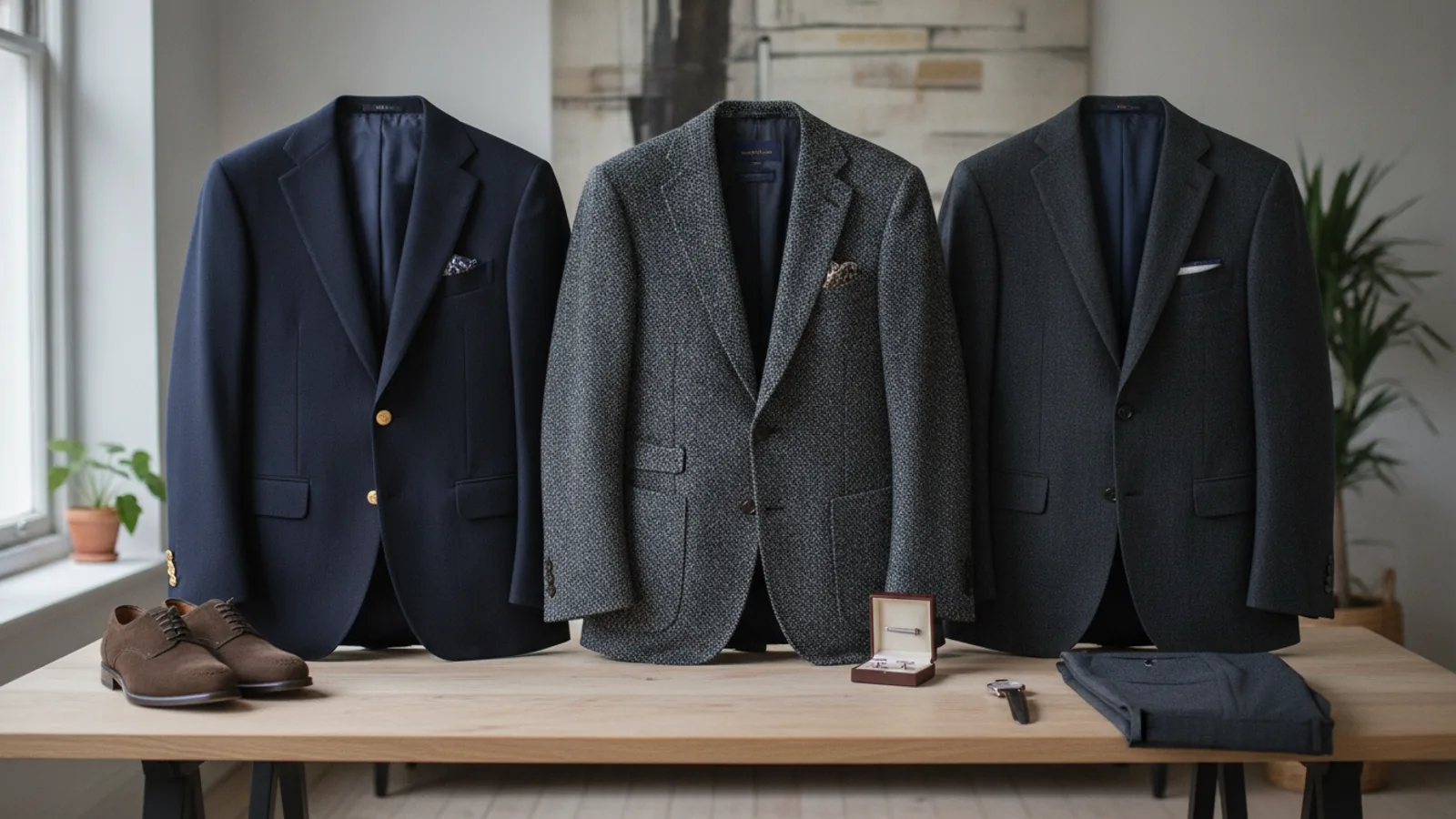
A blazer typically features a more structured silhouette than a sport coat but is less rigid than a suit jacket. Often made from durable fabrics like wool serge, hopsack, or flannel, it's traditionally distinguished by metal buttons, though this is less strict now. Its origins are naval or collegiate, giving it an air of respectable informality. Blazers are designed to be worn as a standalone jacket, effortlessly paired with various trousers, from chinos to tailored wools.
The sport coat, or sports jacket, is the most casual of the three. Its roots are in outdoor sporting activities, hence the name, where freedom of movement and robust, textured fabrics were paramount. Think tweed, corduroy, linen, or heavier wools, often with distinctive patterns like herringbone or check. Sport coats typically have a softer construction, sometimes unlined, with patch pockets or bellows pockets that underscore their casual utility. They are fundamentally designed for mixing and matching, offering textural contrast and relaxed elegance.
A suit jacket is part of a matching set, comprising trousers (and sometimes a waistcoat) made from the identical fabric. This cohesive design is its defining characteristic and primary purpose. Suit jackets are the most formal, featuring a precise, often more rigid construction, refined fabrics like worsted wool or fine mohair, and a clean, uninterrupted line. They are tailored to be worn exclusively with their accompanying trousers for a unified, elegant look, making them unsuitable for standalone wear without losing their intended formality.
Measurement Winners for blazer vs sport coat vs suit
Measurement
Routine fit winner
When considering the ease of integration into an existing wardrobe and the flexibility of fit for varied body types or dressing intentions, the routine fit is a critical factor. A garment that offers a comfortable yet sharp silhouette without demanding bespoke tailoring every time it's worn provides superior utility. This category assesses how accommodating each garment is for everyday wear and general smartness.
Measurement
Formula or feature winner
Each garment comes with an inherent "formula" or set of features that define its character and purpose. This could include specific button types, pocket styles, lining construction, or fabric choices that are emblematic of its class. The winner in this category is the one whose characteristic features offer the most functional and stylistic advantage for a broad range of meaningful applications, aligning with a "fewer throwaway decisions" mindset by maximising utility and timeless appeal.
Measurement
Ease of use winner
Ease of use refers to how effortlessly a garment can be incorporated into various outfits, how simple it is to maintain, and its overall adaptability for different social and professional environments. A piece that requires minimal thought in pairing and offers maximum utility without being overly precious in care or specific in occasion scores highly here. It speaks to the practical aspect of building a versatile and sustainable wardrobe.
Measurement
Value winner
Value, in this context, is measured not just by initial cost, but by cost per wear and the longevity of the garment within a considered wardrobe. A piece that offers extensive utility, remains relevant for years, and reduces the need for multiple, less adaptable items provides superior value. This aligns directly with the brand ethos of making meaningful and lasting decisions rather than fleeting purchases.
Measurement
Buyer confidence winner
Buyer confidence stems from knowing you're investing in a piece that will consistently meet your needs, look appropriate, and deliver on its promise of style and function. This is about reducing purchase anxiety and ensuring that the garment you choose will integrate seamlessly into your life without causing sartorial dilemmas. The winner offers the most straightforward and reliable path to achieving desired stylistic outcomes without complex rules or limitations.
Measurement
Fabric & Materiality
The choice of fabric profoundly influences the garment's appearance, drape, durability, and suitability for different seasons and occasions. A material-aware approach means understanding not just the aesthetic, but also the tactile qualities, performance, and longevity. While all three can be crafted from various materials, their characteristic fabrics highlight their distinct roles. For example, a suit’s formality often demands finer, smoother worsted wools, while a sport coat thrives on textured tweed or robust corduroy.
Measurement
Formality & Occasion Suitability
This measurement assesses which garment is most appropriate for various levels of formality, from highly casual to strictly formal. Understanding the social codes attached to each piece is crucial for making a considered decision that ensures you are always appropriately dressed. An informed choice here prevents common style missteps and enhances your overall presence, reflecting a thoughtful approach to personal presentation.
Choose Blazer If
The blazer is an exceptional choice for the individual who values adaptability and a classic aesthetic. Consider a blazer if:
- You need a versatile cornerstone for your smart-casual wardrobe. A blazer can seamlessly bridge the gap between casual and formal, making it ideal for business casual offices, smart dinners, or weekend outings.
- You appreciate mixing and matching. Blazers are designed to be paired with different trousers – chinos, jeans, tailored wool trousers – allowing for endless outfit combinations without the need for a full suit.
- You seek an enduring garment that transcends trends. The classic navy blazer, in particular, is a timeless investment that remains stylish year after year, embodying the spirit of "fewer throwaway decisions."
- You desire a polished look without the rigidity of a full suit. For presentations, networking events, or semi-formal gatherings where a suit feels too much, a blazer strikes the perfect balance.
- You prefer a slightly more structured silhouette than a sport coat. Blazers offer a clean, defined shape that conveys authority and sophistication, often with more robust shoulder padding and lining than many sport coats.
- You travel frequently and need a single jacket that can adapt to multiple scenarios. Its versatility makes it an ideal packing choice, reducing luggage and sartorial dilemmas on the road.
Choose Sport Coat Vs Suit If
The decision between a sport coat and a suit depends entirely on the specific level of formality and the desired aesthetic. They serve distinct purposes:
Choose Sport Coat If:
- You favour texture and pattern in your attire. Sport coats are the undisputed champions of material interest, available in a vast array of weaves like tweed, corduroy, herringbone, and checks, adding depth to your look.
- You require a refined yet distinctly casual outer layer. For relaxed social events, country weekends, creative workplaces, or casual daytime gatherings, a sport coat offers polish without formality.
- You want to build outfits around individual pieces. Like blazers, sport coats are meant for mixing, but they lean further into casual pairings with robust trousers, dark denim, or even cargo pants in some contexts.
- You appreciate a softer, often less structured garment. Many sport coats feature minimal lining and padding, providing a comfortable, relaxed drape that is perfect for extended wear.
- Your style leans towards a rugged, heritage, or more artistic aesthetic. A tweed sport coat, for example, evokes a sense of tradition and academic charm that is distinct from a blazer or suit.
Choose Suit If:
- You need to project maximum formality and professionalism. For corporate settings, formal events, job interviews, or client meetings, a suit is the non-negotiable standard for conveying respect and seriousness.
- You seek a cohesive and immaculate appearance. The matching fabric of a suit ensures a unified, elegant line from head to toe, creating an unparalleled sense of polish and intentionality.
- You are attending a wedding, formal dinner, or specific celebration. Many social occasions explicitly call for a suit, and attempting to substitute with a blazer or sport coat would be a significant sartorial misstep.
- You value precise tailoring and a sharp silhouette. Suit jackets are typically cut closer to the body and feature more structured elements than blazers or sport coats, designed to present a sleek, uninterrupted profile.
- You require a dedicated garment for significant life events. Investing in a well-fitting suit is a prudent decision for milestones and ceremonies where only the highest level of formal dress is appropriate.
- You understand that a suit is an ensemble and is rarely worn as separates. The integrity of a suit depends on wearing the jacket with its matching trousers; using the jacket as a standalone piece diminishes its intended purpose and often looks disjointed.
Final Verdict: Blazer vs Sport Coat Vs Suit
The choice between a blazer, a sport coat, and a suit is not about identifying a single "best" option, but rather understanding which garment optimally serves a particular purpose or lifestyle. For those committed to making thoughtful, long-lasting additions to their wardrobe – guided by a principle of fewer throwaway decisions – versatility and appropriateness are paramount.
The blazer emerges as the overall winner for its sheer adaptability. It's the most democratic of the three, capable of elevating a casual ensemble or softening a more formal one. Its ability to mix and match with a wide array of trousers, coupled with its timeless appeal, makes it an indispensable item for a considered wardrobe. If you're building a foundation of functional elegance, a well-chosen blazer provides an excellent return on investment, delivering high utility per wear across countless occasions.
The sport coat, while less formal, offers unparalleled opportunities for personal expression through texture and pattern. It is the ideal choice for relaxed yet refined settings, offering a distinct aesthetic that speaks to individual style rather than strict sartorial codes. For those who appreciate material depth and a comfortable, uninhibited feel, the sport coat fills a vital niche.
The suit, by its very nature, stands as the pinnacle of formal dressing. It is an ensemble designed for cohesion and seriousness, essential for professional environments and significant life events. While its versatility as a standalone piece is limited, its power to convey gravitas, respect, and polished elegance is unmatched. Every considered wardrobe requires at least one well-tailored suit for those moments when only the highest level of formality will suffice.
Ultimately, the discerning individual might find a place for all three in their wardrobe, each reserved for its specific and meaningful purpose. But if you are to choose just one cornerstone that offers the most everyday utility and enduring style, the blazer stands out as the most versatile and valuable investment.
Blazer vs Sport Coat Vs Suit: Which Should You Choose? FAQ
What is the main difference between a blazer and a suit jacket?
A blazer is a standalone jacket, often made from durable, distinct fabrics like hopsack or serge, and may feature metal buttons. It's designed to be mixed and matched with various trousers. A suit jacket, by contrast, is part of a matching set with trousers (and sometimes a waistcoat) made from the identical fabric. It's designed to be worn together as an ensemble for a cohesive, formal look.
Can I wear a suit jacket as a blazer or sport coat?
While technically possible, it is generally advised against. A suit jacket is cut specifically to complement its matching trousers, typically with a more structured and formal design. Wearing it separately often makes it look like part of a missing outfit. The fabric of a suit jacket is also usually finer and smoother, which can look out of place when paired with casual trousers like chinos or jeans. Blazers and sport coats have fabrics, textures, and cuts specifically designed for standalone wear.
What occasions are best suited for a sport coat?
Sport coats are ideal for smart casual to business casual occasions. This includes informal dinners, casual social gatherings, country outings, creative work environments, or relaxed weekend events. Their textured fabrics and softer construction lend themselves well to scenarios where a suit would be too formal and a blazer might feel too standard.
How can I tell if a jacket is a blazer or a sport coat?
While there can be overlap, blazers traditionally have solid colours (most famously navy), a more structured feel, and often feature metal buttons. Sport coats tend to be made from more textured fabrics (tweed, corduroy, wool blends), often with patterns like checks or herringbone, and usually have a softer, more relaxed construction with standard plastic or horn buttons. Modern interpretations can blur these lines, but these are reliable indicators.
Which garment is the best investment for a minimalist wardrobe?
For a minimalist or capsule wardrobe focused on versatility and longevity, a well-chosen blazer is often the best investment. Its ability to dress up casual outfits and serve as a reliable piece for semi-formal occasions means it can cover a vast range of needs with a single garment, aligning with the principle of "fewer throwaway decisions."
Are blazers and sport coats interchangeable?
Not entirely. While both are designed to be worn as separates and offer versatility, a blazer leans towards a more formal, classic, and often more structured aesthetic, suitable for business casual. A sport coat embraces a more casual, textured, and often patterned look, making it ideal for relaxed elegance. The choice between them depends on the specific level of formality and the desired stylistic impression.